

Network jackpots are the most dramatic prize pools in online gaming, and at Quick Casino they take up a central position in the platform’s portfolio. These jackpots operate as collective prize funds supplied by wagers placed across multiple casinos using the same game provider’s software, which explains their totals can climb into six, seven, and even eight-figure territory. The structure is fundamentally different from a standalone slot where a fixed maximum win is determined by a paytable. Instead, each real-money spin chips in a tiny fraction of the bet to a shared jackpot pool that is visible on screen, ticking upward in real time. Canadian players accessing Quick Casino can see the jackpot meter of a title like Mega Moolah, and the figure displayed is not an estimate or a projection but the actual amount currently held in a secure, independent account controlled by the game developer. Understanding the mechanics behind these prizes means analyzing contribution rates, seed funding, trigger conditions, and the subtle differences between local and network progressives. Quick Casino offers an interface where these games are clearly marked, and the jackpot totals are updated without delay, showing the transparent, heavily regulated environment that governs this form of gambling in jurisdictions that licence the platform.
RTP and the Chance of Success
The Mirage of a ‘Due’ Jackpot
A common misconception among players is that a network jackpot that has increased far beyond its average win point is past due and therefore more inclined to activate. This is numerically incorrect. The random number generator that controls the jackpot outcome treats every spin as an independent trial with a constant probability, immune by the current size of the prize pool or the time since the last win. The contribution mechanism ensures the pool expands without affecting the trigger odds. At Quick Casino, a Mega Moolah player who wagers immediately after a reset has the exact chance per spin of winning the jackpot as someone who spins when the pool is at a record high. The belief of being due is a cognitive bias, and ethical messaging on the platform gently informs users that outcomes are random. The total RTP of a network jackpot game contains the eventual payout of the progressive prize, but the path to that return is very skewed: a tiny fraction of players will get an huge windfall, while the vast majority will undergo a return nearly resembling the base game paytable. Understanding this distribution is essential for anyone judging the product objectively.
Payout Procedures and Tax Implications in Canada
Identity Checks and Payout Processes at Quick Casino
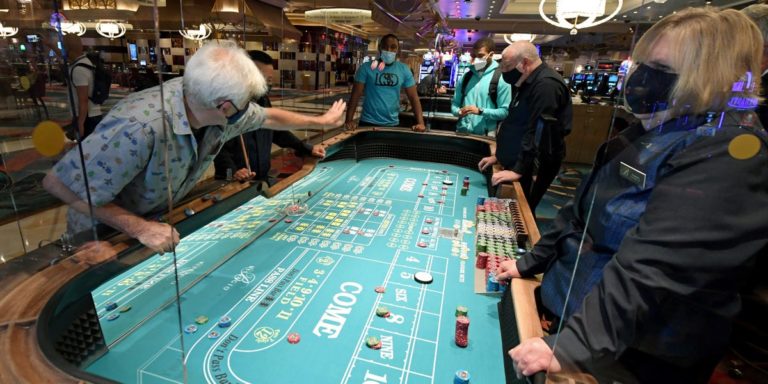
When a network jackpot is secured by a Quick Casino user, the prize amount is paid by the game provider to the platform, which then credits the player’s account. After a standard verification procedure stipulated by Canadian anti-money-laundering laws and licensing obligations, the funds become ready for withdrawal. The verification typically involves identity documents, proof of address, and confirmation of the payment method used for deposits. Network jackpot wins are treated as a single lump-sum payment, not an annuity or instalment plan, which means the full amount can be transferred once the compliance checks end. Quick Casino’s terms specify processing times for large withdrawals, which may be delayed for prizes above a certain threshold to accommodate additional security reviews. This is standard industry practice and not suggestive of payment difficulty. The platform provides clear communication throughout the journey, and the support team is trained to handle the specific logistical demands of jackpot winners, including direction on transaction limits and banking partner coordination.
Tax-Free Wins for Canadian Players

One of the most significant benefits for Canadian players playing network jackpots at Quick Casino is the general absence of gambling taxes on winnings. Unlike players in the United States or certain European jurisdictions, Canadian residents who gamble recreationally do not have their slot or progressive jackpot payouts labeled as taxable income by the Canada Revenue Agency, assuming they are not involved in professional gambling activities. A single massive network jackpot is treated as a gift, not as business earnings. This means that a million-dollar Mega Moolah prize appears in the player’s bank account intact, with no withholding at the source beyond standard bank reporting obligations. The operator does not subtract taxes before payout. However, any interest generated on the money after it enters a savings account becomes liable, and professional gamblers fall under different guidelines, but these scenarios are separate from the casual play that describes the Quick Casino user base. Players are always advised to consult an tax advisor, but the baseline is extraordinarily favourable compared to many other countries.
Startup Financing and Funding Shares
The Purpose of Seed Amounts
A base value is the fixed starting jackpot that the software provider puts into the pool right after a win. Without this mechanism, a network jackpot would reset to a trivial sum, and the momentum that brings in players would fade. Initial capital creates instant value and ensures the upcoming jackpot cycle starts with a compelling headline figure. The seed money is not a gift or a promotional stunt; it is a pre-funded liability that the developer factors in in its long-term financial model, sourced from the total contributions collected over the previous cycle. At Quick Casino, Canadian players regularly observe a jackpot revert to a seed value that is publicly known, typically around one million dollars for Mega Moolah. This transparency encourages confidence, because the player understands exactly what the starting point is. The seed amount also acts as a stabilising factor, lowering the fluctuation in the developer’s payout plan. From a player behaviour perspective, a high seed transforms the pursuit of the jackpot from a speculative hope into a pursuit of a prize that is already substantial even before any fresh contributions are added.
Contribution Percentages and How They Affect Payouts
The contribution percentage is the tiny slice of each wager that the title diverts to the jackpot pool. It is typically between one and five percent, and it is non-negotiable at the operator level. A higher contribution rate leads to faster jackpot growth but somewhat decreases the frequency of base game payouts because the total RTP is fixed. Players at Quick Casino will experience the main game variance as intended by the studio, and the progressive feature works as a separate accumulator. Because the allocation is taken proportionally, larger bet sizes send proportionally more money into the pool, but they do not increase the likelihood of triggering the prize. The activation system is usually a random event determined by a number generator, independent of bet size within a given currency range. The contribution structure is one reason why network jackpots can increase fast during periods of high global activity, such as weekends or holidays, and then plateau during quieter hours. Noticing these trends can be interesting, but they carry no predictive value for when the jackpot might fall.
How Network Jackpots Grow
Every spin on a network jackpot slot directs a fixed percentage of the total bet into the progressive pool. The contribution rate is embedded into the game’s mathematics by the developer and cannot be altered by Quick Casino or any other operator. Typically, the contribution is expressed as a fraction of the return-to-player calculation, implying the jackpot component is carved out before the base game RTP is determined. For example, a game might have a base RTP of ninety-two percent, with an additional five percent allocated to the progressive prize pool. The player’s overall theoretical return stays transparent, though the exact split is rarely visible on the interface. The accumulation process is ongoing, with updates occurring in real time as wagers are placed around the world. When the jackpot is won, it does not fall to zero; instead, the developer immediately starts it with a guaranteed minimum amount, often a substantial figure such as one million Canadian dollars, to restart the growth cycle. Quick Casino presents this seed amount clearly after a win occurs, and the jackpot meter starts increasing again from that point.
Forced-Trigger Jackpots and Countdown Triggers
Some network jackpots operate under a must-drop-by rule, which ensures that the prize will be awarded before a specified time or value threshold is reached. This mechanic changes the dynamic from a purely random event to a measurable window of predictability. A typical must-drop jackpot at Quick Casino might have a 24-hour timer, signifying the prize must pay out to any player before the clock hits zero. The precise moment is still decided by a random number generator, but the knowledge that a win is certain by a deadline creates a distinct tension. These jackpots tend at more modest seed levels and grow rapidly, because the required payout schedule accelerates the collection and redistribution of funds. From an analytical standpoint, the must-drop model adds a time-based variable into the expected value calculation, although the house edge stays built into the contribution rates anyway. Players who watch these games may notice that participation surges as the deadline draws closer, and Quick Casino’s interface shows the countdown timer clearly, enabling Canadian users make educated decisions about when to play without implying any strategy guarantee.
What Exactly Are Network Jackpots?
A network jackpot, casionally called a pooled or linked progressive, is a prize that accumulates across a network of online casinos rather than being confined to a single operator. In practical terms, when a player at Quick Casino spins a qualifying slot, a portion of that stake is directed to a central jackpot server managed by the software studio. At the same time, players at dozens or even hundreds of other Canadian and international casinos are adding from their own wagers, all feeding the same prize pool. This interconnected model is what allows totals to reach life-changing sums without requiring any individual casino to carry the full liability. The software provider, such as Microgaming or NetEnt, administers the jackpot fund independently, keeping the accumulated amount in a segregated account. Quick Casino functions as one of many portals through which the game is accessed, and the operator has no control over when or where the jackpot will drop. That neutrality is crucial for fairness and regulatory compliance. From the player’s perspective, the experience is seamless: they see a prominent jackpot display ticking upward on the game screen, and they know the number is identical to what players at other casinos are seeing at that moment.
Famous Network Jackpot Titles Offered at Quick Casino
Mega Moolah and Its Record-Breaking History
No discussion of network jackpots is finished without covering Mega Moolah, the Microgaming title that has repeatedly set world records for online slot payouts. This game is accessible through Quick Casino and continues to be the most looked for progressive on the platform. Its four-tiered jackpot structure, peaking in the Mega level started at one million dollars, has produced multiple wins topping ten million dollars in Canadian currency equivalents. The African savanna theme is graphically simple, but the jackpot wheel bonus that initiates randomly is what characterizes the experience. When the wheel emerges, the player is certain one of the four progressive tiers, with the Mega segment occupying the smallest sliver of the wheel. The mathematical design makes sure that the Mega jackpot is infrequent relative to the smaller prizes, yet the pure volume of global spins produces enough mega wins to uphold its legendary status. Quick Casino presents the game without overstatement, and the historical win logs are a matter of public record, providing the title a factual gravitas that newer competitors often attempt to replicate with more complex mechanics but less background.
Major Millions and Alternative Established Progressives
Beside Mega Moolah, Major Millions delivers a complementary progressive experience with a different mathematical profile. This five-reel military-themed slot features a three-tiered jackpot and a trigger mechanism based on arranging specific symbols on the payline rather than a random bonus wheel. The predictability of the trigger condition appeals to players who prefer a visible target, even though the probability of hitting that combination is aligned with the game’s overall volatility index. Quick Casino also offers network jackpots from other studios, including titles from NetEnt and IGT, each adding its own contribution rate, seed level, and audiovisual identity. The variety means that Canadian players can pick between games with faster accumulation cycles and those with larger but rarer payout profiles. The common thread across all these titles is the network aggregation model, which guarantees that the jackpot pool shown on Quick Casino is sustained by a global player base.
The contrast among regional and wide-area jackpots
Comprehending local progressive jackpots
Local progressive jackpots are funded exclusively by bets made on a specific game at a sole casino or a compact cluster of casinos operated by the very operator https://quick-casino.ca/. At Quick Casino, a local progressive may be linked across a few of slot titles within the platform’s very ecosystem, but the contribution never exits the operator’s monetary perimeter. The prize pools are more modest by necessity as fewer players are contributing, yet they still can reach substantial five-figure sums. One advantage for players lies in the fact that the odds of hitting a regional jackpot are frequently somewhat more advantageous in comparative terms, not due to the fact that the numerical probability per spin alters, but as the player base competing for the prize is dramatically smaller. Quick Casino provides several local progressives in addition to its network offerings, and the game description consistently clarifies which kind is active. Regional jackpots furthermore tend to reset to a small seed amount offered by the casino, and as the operator controls the liability straight, the top-up after a win happens immediately in the absence of coordination throughout multiple platforms.
The manner in which network jackpots pool among casinos
Network jackpots function as a unified pool that collects contributions from all participating casino that offers the game. Quick Casino does not manage this pool; it just supplies access to the game client, which links to the provider’s server. All real-money wager placed on that particular title, irrespective of the casino’s permit jurisdiction or physical location of the player, forwards a fixed contribution percentage into the collective jackpot fund. This is the reason a player based in Toronto may watch the jackpot increase by a few thousand dollars over minutes after a jump in activity from European or Australian players. The aggregation model produces a snowball effect: bigger jackpots draw more players, which accelerates the accumulation further. The core software continuously calculates the total, ensuring that the shown figure on Quick Casino aligns with the figure on all other operator’s interface to the cent. This coordination is mandated by the testing certifications that the games hold, and it is audited regularly to stop discrepancies or manipulation.
Safe Gambling and Fund Control for Progressive Play
Progressive jackpots can have a powerful psychological attraction because the visible prize totals are objectively life-altering, and the per-spin contribution creates an sense of engagement in something bigger than a typical slot session. Quick Casino includes responsible gambling tools directly into the user interface, including deposit limits, reality checks, and voluntary session timeouts, all of which are applicable during progressive play. The logical approach is to consider the jackpot as a infrequent supplementary event, not as the main purpose of a betting budget. The house edge on the base game remains, and the chance of hitting the top prize is extremely low, usually in the order of one in tens of millions of spins. Bankroll management needs to be arranged around the entertainment value of the base game, with the progressive amount regarded as an unexpected bonus if it comes to trigger. Quick Casino’s analytical framework encourages users to determine a fixed loss limit before opening a network jackpot title and to regard chasing a must-drop deadline as a leisure choice rather than a guaranteed outcome. The platform’s communication consistently stresses that jackpots are won at random times, and no sequence of increased wagering influences the result.